Posted on

How Do Base Station Antennas Survive Hurricanes

DENGYOUSA Base Stations surviving hurricanes

How do base station antennas survive hurricanes? The answer, my friend, is blowing in the wind.

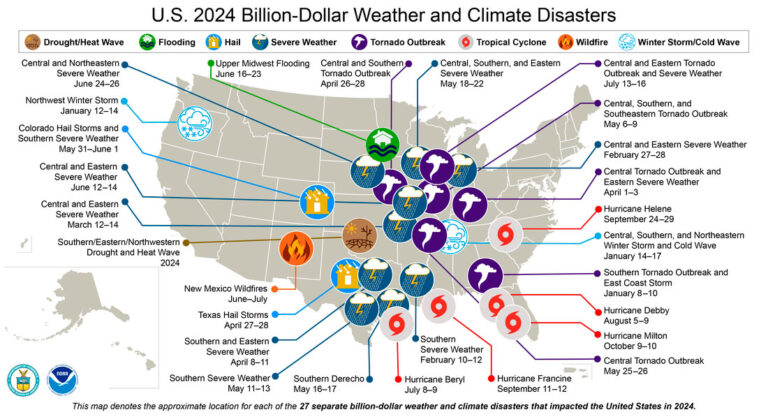
There were 27 individual weather and climate disasters in 2024 with $1 billion or more in damages – following a record-setting 2023 with 28 such events in the US. Wireless communications between family members, first responders, disaster relief workers, and infrastructure repair personnel become mission-critical. The stakes are high. In this article, we dive into the wind loading of base station antennas, a key parameter of their ability to survive storms and extreme wind conditions.

Wind Loading

When the wind blows, an antenna experiences a force pushing against it. The stronger the wind, the stronger the force. The larger the antenna, the stronger the force. The equation describing the force acting on the antenna is:

F = 0.5 * ρ * V² * Cd * A

F is the wind force

ρ is the air density (the humid air of tropical storms is loaded with moisture)

V is the wind speed (this term is squared, so it has a dominant effect)

Cd is the antenna drag coefficient, a measure of aerodynamic efficiency (i.e. its shape)

A is the cross-sectional area of the antenna directly facing the wind (i.e. its size)

Industry Standards

The air density (ρ) and wind speed (V) are design parameters for operational and survival limits, which generally depend on local conditions and building codes. In the US, the Telecommunications Industry Association (TIA) sets the national standard with ANSI/TIA-222-H. This was updated in 2018 to align with the American Society of Civil Engineers standard, ASCE-7, for gust wind speeds, seismic loading, and other specifications. The Next Generation Mobile Networks Alliance (NGMN) also publishes the BASTA guidelines to standardize how electrical and mechanical parameters of antennas are specified.

In the United States, base station antennas are generally rated to survive storm wind speeds up to 150mph. South Dakota, Montana, Wyoming, Idaho, and Colorado are known for high average wind speeds. Expansive, flat plains provide few natural obstacles to slow the wind, while mountain ranges can accelerate air currents. Florida is in the path of many hurricanes emanating from the Gulf of Mexico every year, so highly durable antennas are required.
Japan Experiences Extreme Wind Loading

Japan frequently experiences major earthquakes and typhoons, by virtue of the fact that the island nation is situated in the Pacific Ring of Fire tectonic belt and in the Northwest Pacific Typhoon Alley, where the planet’s most powerful tropical cyclones are born. As a result, Japan has some of the strictest building codes in the world.

Dengyo has supplied antennas to the Japanese market for 70 years, and our antennas are built to withstand Japan’s extreme weather events. Wind speed survivability is rated to 200mph, higher than the 150 mph in the US. To meet these high standards, Dengyo’s antenna designs feature slimmer panel widths and aerodynamic contours to reduce drag. Our build quality is second to none, with RMA rates among the lowest in the industry.

For more information on Dengyo’s base station antenna portfolio, please visit https://dengyousa.com/antenna/

Posted on

Lens Antennas: A New Category of Multi-Beam Base Station Antennas

The Luneburg lens

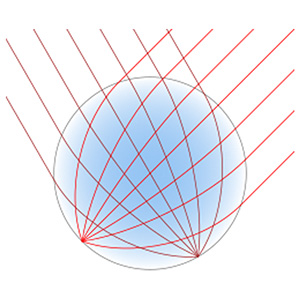
Just as a glass magnifying lens focuses light, an RF lens focuses radio frequency waves traveling through it into a point on the other side. When such a lens is placed in front of radiating structure – such as an antenna – the transmitted and received RF signals are also focused. This can result in improved RF link budgets, longer range, or more focused sectors. That’s the basic idea behind lens antennas.

RF lenses are made with specialty dielectric materials that refract RF waves, similar to optical lenses which use glass to refract light. But these RF lenses are more than just a simple magnifying lens – it’s a special type of RF lens known as a Luneburg lens, which enables highly efficient multi-beam, multi-sector operation to improve coverage and capacity.

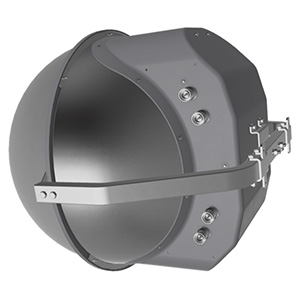
Dengyo lens antenna
Lens antenna: two beams @ 15° beamwidth
a simple type of spherical lens
Spherical RF lens focuses the beams

The Luneburg lens

Invented in 1944 by Rudolf Luneburg, this unique lens design has the special property that it focuses radio waves regardless of which direction the signal is coming from, due to its spherical shape. A standard convex magnifying glass only focuses properly when viewed boresight, on-axis – when viewed off-center, the image is distorted. However, the view through a glass marble, a simple type of spherical lens, stays the same regardless of direction. In mobile networks this means that multiple beams, or sectors, can be served by a single lens.

To achieve the Luneburg lensing effect, the lens is constructed from dielectric materials of varying permittivity’s, typically 2 at the center of the lens and 1 at the edge. This creates a gradient index of refraction which smoothly bends and focuses the radio waves as they pass through the lens.

Implementing this effect on antennas allows for some improvements in a whole array of applications

Sector splitting – small sectors, higher capacities

Dense urban environments, stadiums and event venues, and transportation corridors are typical locations where heavy mobile traffic and limitations on antenna placement dictate the need for optimized coverage and capacity techniques. Sector splitting is one such technique: instead of using a single 65° beam for a sector, multiple beams of 30°, 20°, 15° and so on can be used. The reduction in beamwidth allows multiple beams to cover the same area and boost throughput overall.

Traditional sector antennas are also capable of providing multiple beams, though with a significant trade-off of larger antenna sizes and reduced performance. Alternatively beam-forming and beam shaping techniques used by massive MIMO radios have a similar effect on coverage and capacity, but MIMO radios are not viable in the lower frequency bands. They also rely on power-intensive digital signal processing algorithms, while a lens is a simple passive element that doesn’t consume any power.

Luneburg lens antennas are a new tool for solving the perennial challenge of coverage and capacity constraints in mobile networks. Their performance shows excellent results in spatial efficiency, gain and coverage, and are an excellent fit for cell sites that serve many subscribers, experience congestion, or have coverage challenges.