Posted on

Choosing the Right 3.5 GHz Antenna

Dengyo USA Antennas

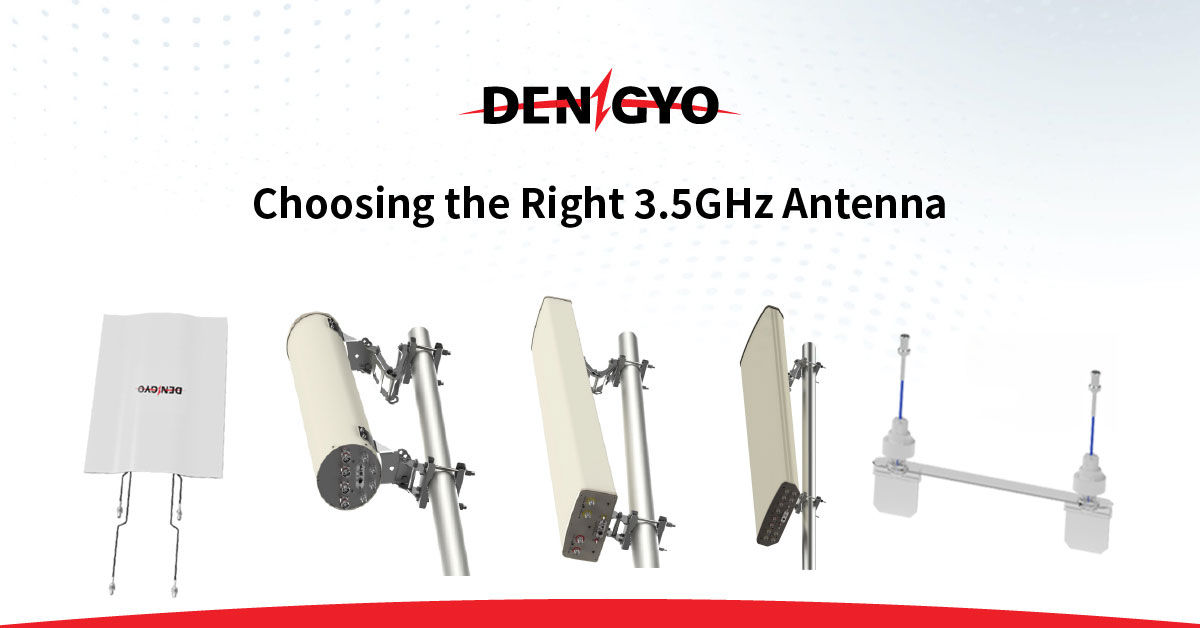
With new opportunities opening up due to a massive infusion of 500 MHz of spectrum to the wireless industry, you need to be prepared to take full advantage. That means choosing the 3.5GHz antenna that best suits your needs. 

Whether you’re using it for IoT, 5G, LTE, Fixed Wireless Broadband, Private Networks or for new, emerging applications, DENGYO has you covered with a variety of antennas that cover the range between 3.3-4.2GHz. 

Panel Antennas

The standard antenna used by most of the industry, panel antennas are considered the workhorse for wireless solutions. Available in multiple port options, DENGYO’s panel antennas are designed with efficiency in mind and perfect for any base station configuration. 

4-Port and 8-port 

  • Single Band
  • 7 models to choose from 
  • 3-8 feet in height depending on model 

10-Port and 12-Port

  • Multi-Band
  • 5 models to choose from
  • 2-8 feet in height depending on model

Beam-Forming Antennas

Using focused wireless signals, beam-forming antennas are more precise in signal delivery than panel antennas resulting in faster and more reliable connectivity.

Multiple Port Options (16, 20, 24, 28)

  • Multi-band
  • 15 models to choose from
  • 4-9 feet in height depending on model 

Canister Antennas

Designed with aesthetics in mind, cannister antennas have all the functionality of a panel antenna while being more visually appealing to the eye. 

Multiple Port Options (4, 12, 14, 16, 18)

  • Multi-band
  • 7 models to choose from
  • 2-6 feet in height depending on model

Specialty Antennas

Primarily used for indoor wireless solutions, DENGYO’s specialty antennas are small and lightweight, designed to provide premium coverage while blending into their environment. 

VLTA – Visible Light Transparent Antenna

  • Frequency range 1710-5000GHz
  • 2 models to choose from
  • Dimensions: 75x370mm or 160x160mm, depending on model
  • Similar in look and feel to plexiglass, allowing light to pass through it.

Film Wrap Antenna

  • Frequency range 3400-4100GHz
  • Dimensions: 190x300mm
  • Flexible and decorative, sticks to any surface using adhesives 

With almost 40 antenna designs available and the ability to create customized solutions that meet your unique RF needs, DENGYO’s portfolio of 3.5GHz antennas can help you accelerate your technology and deployment. For more detailed information on all our 3.5GHz antennas, download the brochure so you can review our detailed specifications. For more than 70 years, DENGYO has sought to enrich our future by drawing on our unique cultural heritage to create innovative wireless solutions to the most complex challenges facing our industry today. Drop us a lineand let us help you enrich your future. 

Posted on

Dengyo Environmental, Social, and Governance Principles

Dengyo Sustainability

As the signs of global warming become more pronounced, sustainability has emerged as an ever-more critical goal worldwide. The international business community has responded in terms of Environmental, Social, and Governance (ESG) principles. 

In 2006, the United Nations-supported Principles for Responsible Investment (PRI) report first discussed ESG standards and principles, requiring that companies incorporate ESG standards in financial evaluations. In the 2010s and 2020s, ESG became a much more proactive area. 

Sixty-three investment companies with $6.5 trillion in assets under management signed on early. As of March 2022, 4800 signatories from over 80 countries with assets of about US $100 trillion had signed up to the PRI. 

ESG factors are an effort to guide businesses toward and measure responsible practices. But ESG is also good business. Upcoming generations – Millennials and Gen Z – are much more socially conscious than their predecessors, basing buying and investment decisions on ESG factors. But what does ESG mean in practice, and how is Dengyo incorporating ESG in its business philosophy and operations?

ESG Definitions

Environmental

The “E” in ESG is the environmental component. It refers to how an organization handles environmental impacts and risk management. It includes the level of greenhouse gas emissions a company’s activities generate, how it manages natural resources, and how prepared it is for issues associated with climate change, such as severe weather, fires, and flooding. 

Social

The “S” in ESG is the social component. This element includes how an organization manages human capital, stakeholder relationships, and community impact.

Governance

Governance is the “G” in ESG. It refers to the leadership and management of an organization. Good governance aligns leadership’s initiatives with stakeholder expectations and promotes transparency and accountability in business and social matters.

Dengyo and ESG

Dengyo’s mission has always been to open up the future with radio waves.

  • Using unique technology, we create new value that connects people and society, contributing to society’s progress and development.

This mission is the foundation of Dengyo’s sustainability principles and practices and informs our sustainability statement. 

  • We strive to resolve social issues through our business and contribute to the realization of a better society.

Read on for specifics regarding how Dengyo responds to ESG guidelines. 

Dengyo and Environmental Factors

We believe developing new technology to harness radio waves can help solve environmental and societal issues. Dengyo aims to develop technology that improves how people connect and resolves medical, safety, security, environmental, and energy challenges.

Dengyo’s Environmental Actions

  • In all our business activities, we take climate change into account. We promote carbon neutrality by striving for the Science-Based Targets (SBT) that seek to limit global temperature rise to 2°C above pre-industrial levels. 
  • We are constantly developing business activities that contribute to our goal of reducing our greenhouse gas emissions 30% by 2030 compared to 2018. 
  • We conduct environmental behavioral guidelines education for all employees via e-learning, including new hires and executives, achieving a 100% participation rate.
  • In our operations, we have updated to high-efficiency air conditioning equipment, switched our lighting to LED, and introduced solar power generation equipment. We continue to upgrade as these technologies further develop toward lower environmental impact. 
  • We ask all our suppliers to agree to our Sustainable Procurement Policy, which includes regulatory compliance, human rights protection, environmental conservation, and workplace safety. Seventy percent of our suppliers have signed the policy, and we have trained 100% of our employees on responsible sourcing.

Dengyo and Social Factors

All of Dengyo’s activities respect human rights. We contribute to our community and require that every employee act with high ethical standards and integrity.

Dengyo’s Social Actions

  • Dengyo’s Sustainability Behavior Guidelines state that we will respect human rights and prohibit discrimination, harassment, child labor, and forced labor. 
  • We share our Supply Chain CSR Procurement Promotion Guidelines with our business partners. These guidelines include human rights requirements. 
  • We regularly monitor our entire supply chain for negative impacts on human rights and work to prevent or reduce any we identify. 
  • We maintain a comfortable working environment, prohibit harassment, promote work-life balance, and provide flexibility through telework. 
  • We consider biodiversity in the landscaping around our offices and perform cleanup activities to keep our grounds attractive for the local community. 
  • When emergencies arise, we respond, contributing to re-establishing communications.

Dengyo and Governance Factors

We continually evaluate our governance factors and train our employees in relevant topics. We focus on productivity improvement to reduce overtime hours and overworking. 

Dengyo’s Governance Actions

  • We proactively reduce information security risks, protecting internal and confidential information.
  • We manage safety in the workplace for the protection of all individuals and have an excellent safety record. 
  • We conduct regular education and training to enable employees to express their abilities fully and to disseminate information about respecting human rights and eliminating harassment. 
  • We respect employees’ labor rights, including organizing and bargaining collectively. 
  • We comply with all applicable laws and regulations. 
  • The company responds in good faith to any act that violates laws, regulations, guidelines, and internal rules. 
  • We promote respect for human rights and fair business activities. 
  • We have had no serious legal violations or information security incidents.
  • We maintain an internal whistle-blowing system and a section on our website where external stakeholders can inquire about compliance.

A Few Final Words About Dengyo and ESG

At Dengyo, we strive to be conscientious stewards of the environment, treat employees, partners, and community members respectfully, and constantly improve our ESG efforts. As the world’s environmental situation evolves, we stay flexible and proactive in our initiatives. It’s not only the right thing to do. It closely aligns with our overall mission:

  • Using unique technology, we create new value that connects people and society, contributing to society’s progress and development.

If you have any questions, contact us. We would love to hear from you.


Posted on

Design Your Own Custom Antenna

Design Your Own Custom Antenna

In the world of RF, there is no such thing as a one-size-fits-all antenna. A stadium antenna is designed for capacity and a restricted coverage area, while a macro base station antenna may be optimized for high gain and requires RET (remote electrical tilt) functionality. Some sites require concealment or must comply with strict building codes or municipal by-laws.

You don’t have to be an RF engineer to design an antenna. At DENGYO, our core competency is in designing and manufacturing quality antennas. We do the heavy lifting so that you can focus on the key performance specifications. Let’s look at some of the key parameters that can be specified when designing a custom antenna.

Base Station Antenna customization options

  1. Frequency Bands
    Multi-band antennas serve multiple frequency bands with a single antenna and minimizes footprint. An operator’s spectrum holdings may vary by area and by frequency, so the combination of frequency bands deployed may vary by area/site. We tailor to the customer bands with antennas that have wide frequency performance at all the popular spectrums from 617 MHz to 6 GHz.
  2. Number of ports 
    The number of ports on an antenna varies greatly to match both frequency bands and radio configurations.  From a simple 2 port antenna for limited spectrum like low band 617-894 MHz with 2×2 radio configuration; to 28 ports at low band, mid band, high band with 2×2 radio configuration; to 4×4 radio configuration or 8×8 radio configuration for MIMO applications where necessary. The number of ports at each frequency will vary to match the radios used for any bands or sub bands within the antenna’s frequency range.
  3. Gain
    Gain is typically maximized at the different frequencies, while at the same time each frequency band needs to have the gain provide similar coverage to match the radio.  The higher the frequency, the higher the attenuation and hence the shorter the range. Higher frequencies usually require higher gain to reach the cell edge.  This however can also be managed by using MIMO configurations that will also increase the effective reach of the signal. The lower the frequency the larger the antenna elements and antenna dimensions will vary depending on the gain needed.
  4. Horizontal Beam Width (HBW)
    One method to adjust coverage and capacity is to engineer the radio sites with different HBW antenna configurations.  The very popular 65 degree HBW is typically used for a 3 sector site. If an engineer wants to add capacity to same site often they will reduce the HBW to 45 degrees or 33 degrees to add sectors from 4 to 6, or even more, with narrower beam antennas.  A narrower HBW typically requires a wider antenna with antenna elements side by side. This allows more radios to be connected and therefore increase capacity at the site.  Providing antenna designs to suit the customer needs for HBW is yet another customizable option.
  5. Vertical Beam Width (VBW)
    The VBW of the antenna is used to also optimize the coverage area of where the radio signals are transmitted to and received from.  A very large vertical beam will spread the signal in a larger area and must be managed carefully.  For smaller VBW typically more antenna elements are stacked to reduce the beam which also adds gain.  Adjusting the VBW for an antenna is therefore a desirable customization option.
  6. Passive Intermodulation (PIM)
    These unwanted PIM signals that can cause problems with signal integrity and impact data rates to and from the mobiles need to be managed very carefully.  Minimizing any nonlinear interaction of the signal while being conducted and transmitted by the antenna is critical. The current standards are often revised to higher requirements as new standards evolve for higher data rates from analog to GSM, CDMA, WCDMA, LTE, 5G and higher. We have seen requirements evolve from -150 dBc to -153 dBc to even -159 dBc (using two 20 watt signals).
  7. Remote Electrical Tilt (RET)
    This requirement is tied very closely to the radio configuration required.  The RET mechanically changes the phase of the different antenna elements so that the antenna beam is adjusted vertically.  For each radio configuration, the RET device will allow the adjustment of multiple antenna beams for the radio(s) connected to the associated antenna ports. So having one command to the RET device control two beams for a 2×2 radio configuration or 4×4 or 8×8 is desirable.  We provide options for any number of radio configurations.
  8. Size and Weight
    The final dimensions of an antenna are always a critical requirement for mobile network operators.  Minimizing the antenna’s final size and weight is an important design consideration.  Tower loading and wind loading must be managed since most towers will have multiple antennas for each sector and will often have antenna at multiple levels.  Making sure the site is physically robust is very important. Also, often for leased towers, operators may have leasing costs that will vary by size and weight.nfiguration. 

The Design Process

Our design process is a robust process where all the considerations above (as well as many more) are evaluated against our capabilities and existing designs.  The number of antenna elements for gain, HBW, VBW are considered and accounted for.  Simulation of the design is the first step to ensure the design is capable.  Specifications are then provided with antenna radiation patterns to customer for approval. After simulation the initial engineering units are built and evaluated. Materials are carefully selected for PIM performance along with the other requirements.  RET configuration and mechanical design is then completed. After initial engineering build and evaluation small adjustments may be made for final mass productions considerations and performance.

Manufacturing and Testing

During the engineering evaluation documentation is completed so that at the end of engineering evaluation the product is ready for mass production.  Testing methods and equipment required to measure compliance are determined so that each product is manufactured and tested the same way each time, to ensure dependable and reliable performance. Each antenna is tested to ensure customer never has an issue and there is test data available for each unit.

Posted on

Why Base Station Antennas Play a Vital Role

Why Base Station Antennas Play a Vital Role

We live in a world that is increasingly impacted by Artificial Intelligence. AI is all around us, permeating practically every activity and human pursuit. In the world of telecommunications AI is having a huge impact. In three important ways it has underscored the critical role that base station antennas play in wireless network communications.

  • Base station antennas must transmit huge amount of data.
  • They must support low latency communications
  • They must be extremely efficient with high gain
  • Dependable with high quality

Base station antennas are the backbone of effective data transmission. Especially in our AI-driven world, they provide high-speed, low-latency, and reliable connectivity for the many data-intensive applications that depend on them.

Drivers, Doctors, and Drones

Autonomous vehicles need to instantly analyze data from cameras and sensors to make driving decisions, which requires high-throughput communication. Base station antennas play a central role this high-speed data transmission, allowing AI systems to operate in real-time.

Similarly, AI-powered smart traffic systems rely on split-second communication between sensors, control centers, and other devices. High-performance base station antennas provide seamless, real-time connectivity, allowing AI systems in traffic control to make accurate and timely decisions.

Another example is remote medical diagnosis. Physicians must transmit diagnostic data in real-time with 100% accuracy. Supported by base stations, they can accomplish this from hundreds of miles away.  And as base stations evolve to handle broader frequency bands, the promise of fast and reliable data transmission will expand, even in crowded networks.

Autonomous drones and smart city monitoring systems involve numerous devices connected simultaneously to the network. Here, base station antennas function as the foundation, supporting efficient processing of AI data across multiple devices.

Growth is Everywhere

The Internet of Things continues to rapidly expand. IoT devices, including robots, and wearables, generate massive amounts of data that need to be processed locally (at the edge) or transmitted to cloud systems. 5G and 6G base station antennas optimize data transfer, enabling real-time AI decision-making without network congestion. By providing ultra-fast, secure, and efficient communications, they will allow the growth of IoT to move forward smoothly.

Base station antennas are important even in agriculture (smart farming). AI-driven crop monitoring, irrigation control, and automated machinery depend on 5G and IoT antennas in rural areas. Reliable connectivity ensures AI models can make real-time farming decisions with uninterrupted accuracy with the coverage from high gain efficient antennas.

In a world increasingly dependent on AI, base station antennas do more than just transmit signals. They are intelligent, adaptive, and essential for AI-powered connectivity.  At DENGYO, our decades-long pursuit of cutting-edge innovation has resulted in the development of antennas that can meet the ever-expanding needs of our AI-driven world.

Posted on

How Do Base Station Antennas Survive Hurricanes

DENGYOUSA Base Stations surviving hurricanes

How do base station antennas survive hurricanes? The answer, my friend, is blowing in the wind.

There were 27 individual weather and climate disasters in 2024 with $1 billion or more in damages – following a record-setting 2023 with 28 such events in the US. Wireless communications between family members, first responders, disaster relief workers, and infrastructure repair personnel become mission-critical. The stakes are high. In this article, we dive into the wind loading of base station antennas, a key parameter of their ability to survive storms and extreme wind conditions.

Wind Loading

When the wind blows, an antenna experiences a force pushing against it. The stronger the wind, the stronger the force. The larger the antenna, the stronger the force. The equation describing the force acting on the antenna is:

F = 0.5 * ρ * V² * Cd * A

F is the wind force

ρ is the air density (the humid air of tropical storms is loaded with moisture)

V is the wind speed (this term is squared, so it has a dominant effect)

Cd is the antenna drag coefficient, a measure of aerodynamic efficiency (i.e. its shape)

A is the cross-sectional area of the antenna directly facing the wind (i.e. its size)

Industry Standards

The air density (ρ) and wind speed (V) are design parameters for operational and survival limits, which generally depend on local conditions and building codes. In the US, the Telecommunications Industry Association (TIA) sets the national standard with ANSI/TIA-222-H. This was updated in 2018 to align with the American Society of Civil Engineers standard, ASCE-7, for gust wind speeds, seismic loading, and other specifications. The Next Generation Mobile Networks Alliance (NGMN) also publishes the BASTA guidelines to standardize how electrical and mechanical parameters of antennas are specified.

In the United States, base station antennas are generally rated to survive storm wind speeds up to 150mph. South Dakota, Montana, Wyoming, Idaho, and Colorado are known for high average wind speeds. Expansive, flat plains provide few natural obstacles to slow the wind, while mountain ranges can accelerate air currents. Florida is in the path of many hurricanes emanating from the Gulf of Mexico every year, so highly durable antennas are required.

Japan Experiences Extreme Wind Loading

Japan frequently experiences major earthquakes and typhoons, by virtue of the fact that the island nation is situated in the Pacific Ring of Fire tectonic belt and in the Northwest Pacific Typhoon Alley, where the planet’s most powerful tropical cyclones are born. As a result, Japan has some of the strictest building codes in the world.

Dengyo has supplied antennas to the Japanese market for 70 years, and our antennas are built to withstand Japan’s extreme weather events. Wind speed survivability is rated to 200mph, higher than the 150 mph in the US. To meet these high standards, Dengyo’s antenna designs feature slimmer panel widths and aerodynamic contours to reduce drag. Our build quality is second to none, with RMA rates among the lowest in the industry.

For more information on Dengyo’s base station antenna portfolio, please visit https://dengyousa.com/antenna/

Posted on

Lens Antennas: A New Category of Multi-Beam Base Station Antennas

The Luneburg lens

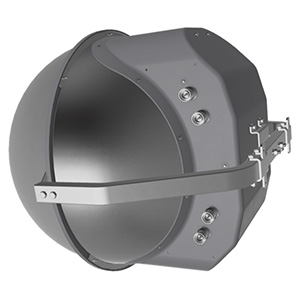
Just as a glass magnifying lens focuses light, an RF lens focuses radio frequency waves traveling through it into a point on the other side. When such a lens is placed in front of radiating structure – such as an antenna – the transmitted and received RF signals are also focused. This can result in improved RF link budgets, longer range, or more focused sectors. That’s the basic idea behind lens antennas.

RF lenses are made with specialty dielectric materials that refract RF waves, similar to optical lenses which use glass to refract light. But these RF lenses are more than just a simple magnifying lens – it’s a special type of RF lens known as a Luneburg lens, which enables highly efficient multi-beam, multi-sector operation to improve coverage and capacity.

Dengyo lens antenna
Lens antenna: two beams @ 15° beamwidth
a simple type of spherical lens
Spherical RF lens focuses the beams

The Luneburg lens

Invented in 1944 by Rudolf Luneburg, this unique lens design has the special property that it focuses radio waves regardless of which direction the signal is coming from, due to its spherical shape. A standard convex magnifying glass only focuses properly when viewed boresight, on-axis – when viewed off-center, the image is distorted. However, the view through a glass marble, a simple type of spherical lens, stays the same regardless of direction. In mobile networks this means that multiple beams, or sectors, can be served by a single lens.

To achieve the Luneburg lensing effect, the lens is constructed from dielectric materials of varying permittivity’s, typically 2 at the center of the lens and 1 at the edge. This creates a gradient index of refraction which smoothly bends and focuses the radio waves as they pass through the lens.

Implementing this effect on antennas allows for some improvements in a whole array of applications

Sector splitting – small sectors, higher capacities

Dense urban environments, stadiums and event venues, and transportation corridors are typical locations where heavy mobile traffic and limitations on antenna placement dictate the need for optimized coverage and capacity techniques. Sector splitting is one such technique: instead of using a single 65° beam for a sector, multiple beams of 30°, 20°, 15° and so on can be used. The reduction in beamwidth allows multiple beams to cover the same area and boost throughput overall.

Traditional sector antennas are also capable of providing multiple beams, though with a significant trade-off of larger antenna sizes and reduced performance. Alternatively beam-forming and beam shaping techniques used by massive MIMO radios have a similar effect on coverage and capacity, but MIMO radios are not viable in the lower frequency bands. They also rely on power-intensive digital signal processing algorithms, while a lens is a simple passive element that doesn’t consume any power.

Luneburg lens antennas are a new tool for solving the perennial challenge of coverage and capacity constraints in mobile networks. Their performance shows excellent results in spatial efficiency, gain and coverage, and are an excellent fit for cell sites that serve many subscribers, experience congestion, or have coverage challenges.